Strength Tarot Card Meaning: Courage, Patience, and the Gentle Kind of Power
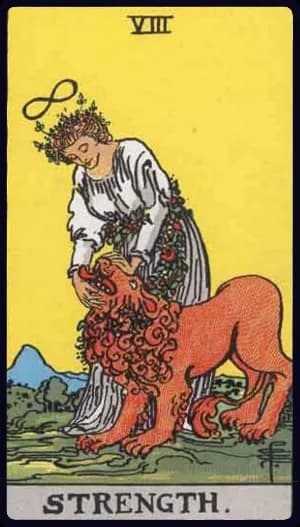
Strength is card eight, and it shows one of the calmest scenes in the whole deck. A woman in a white dress has her hands on a lion's jaws, calm and unafraid. The lion, for its part, looks about as dangerous as a big house cat. Nobody is wearing armor and nobody is holding a weapon, and yet this is the card called Strength.
That's the whole point. After the Chariot, which wins through control and effort, Strength shows a different kind of power: the kind that comes from patience, compassion, and being comfortable with the wild parts of yourself. It's one of the most quietly encouraging cards you can draw.
This guide covers where the card came from (including why it's card eight in some decks and card eleven in others), what every detail on the Rider-Waite-Smith version means, its astrology, how to read it upright and reversed in every area of life, how spread position changes it, which cards change its meaning, and the mistakes people make with it.
Quick reference
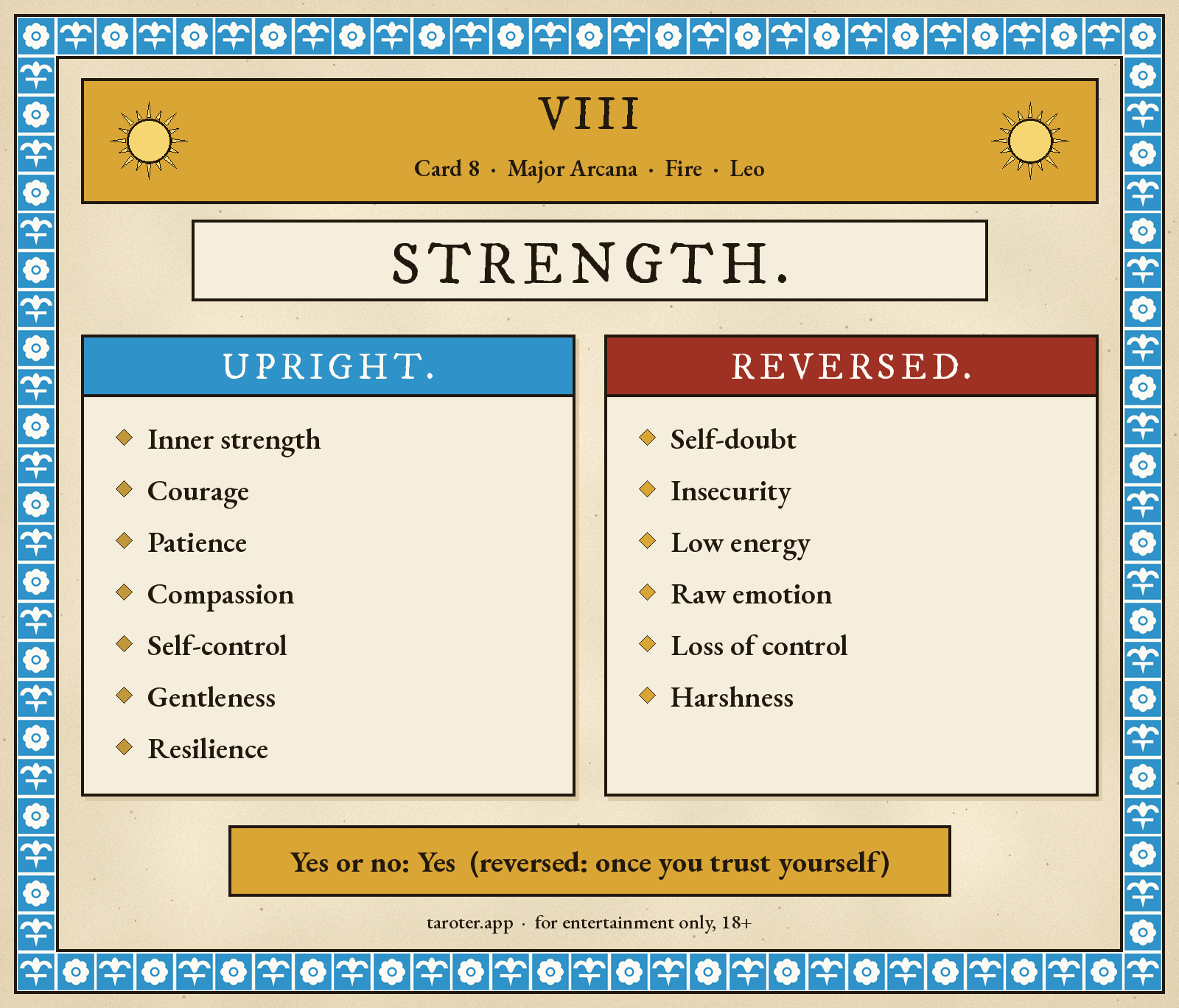
| Number | 8 (VIII) in Rider-Waite-Smith; 11 (XI) in Marseille and older decks |
| Arcana | Major |
| Element | Fire |
| Astrology | Leo |
| Hebrew letter | Teth (ט) |
| Upright keywords | inner strength, courage, patience, compassion, self-control, gentleness, resilience |
| Reversed keywords | self-doubt, insecurity, low energy, raw emotion, loss of control, harshness |
| Yes or no | Yes (reversed: yes, once you trust yourself) |
Where Strength comes from
In the early Italian tarot decks of the 15th century, this card was one of the cardinal virtues. Medieval and Renaissance art loved to paint the virtues as figures: Justice with her scales, Temperance pouring water between two cups, and Fortitude, which is the older name for this card. Fortitude meant courage and the ability to endure hardship. (The fourth cardinal virtue, Prudence, never got a card of its own, which tarot historians have been puzzling over for a long time.)
Early versions of Fortitude look very different from the modern card. Some show a woman holding or breaking a stone column, a reference to the biblical Samson pulling down the pillars of the temple. Others show a man with a raised club standing over a lion, which is Hercules killing the Nemean lion, one of his famous labors. That's strength as brute force: the hero who beats the beast.
By the Tarot de Marseille, the card is called La Force and the figure has become a woman who calmly holds open (or closes) the jaws of a lion. She wears a wide-brimmed hat whose curving shape echoes the hat of the Magician. The violence is gone. She handles the lion easily.
When Arthur Edward Waite and Pamela Colman Smith made the Rider-Waite-Smith deck in 1909, they kept the woman and the lion and softened the scene even further. Smith's woman is gentle, almost tender, and the lion seems to be cooperating. Waite called the card "Strength, or Fortitude" in his Pictorial Key to the Tarot (1910), and he described it as a strength that works through innocence and gentleness. His upright meanings include power, energy, action, courage, and magnanimity. For reversed he lists things like abuse of power, despotism, weakness, and discord.
Why is Strength card 8 (and Justice card 11)?
Here's the part that confuses a lot of new readers. In the Tarot de Marseille and most older decks, Justice is card 8 and Strength is card 11. In the Rider-Waite-Smith deck, and most modern decks based on it, they've traded places: Strength is 8 and Justice is 11.
The swap came from the Hermetic Order of the Golden Dawn, the 19th-century occult society Waite belonged to. The Golden Dawn matched each Major Arcana card to a Hebrew letter and an astrological sign. When they lined everything up, they found that the letter and sign that fit Strength (Teth and Leo) belonged in position eight, and the ones that fit Justice (Lamed and Libra) belonged in position eleven. The zodiac order made more sense that way: Leo comes before Libra, with Virgo (the Hermit) in between. So they swapped the cards to fit the system.
Waite followed the Golden Dawn, and because his deck became the most popular in the English-speaking world, his order became the standard for most modern decks. In the Pictorial Key, he more or less shrugged it off, saying the change was made for reasons that satisfied him and that it didn't really matter for the meaning of the cards.
If you use a Marseille deck, you'll see Strength as XI. If you use a Rider-Waite-Smith deck or one of its many descendants, it's VIII. Neither is wrong. They're just two traditions, and the meaning of the card is the same either way.
Where this card sits in the Fool's Journey
In the Chariot, the Fool learned how to win in the outside world. The charioteer held two opposing forces in check (the black and white sphinxes) through sheer willpower, and it worked. But it was exhausting, and it didn't actually change those forces. It just kept them on a short leash.
Strength is the next lesson, and it goes deeper. Here the Fool meets the lion: the raw, instinctive, passionate side of themselves. Fear, desire, anger, hunger, pride. The Chariot would have tried to control it. Strength befriends it instead. The woman doesn't suppress the lion or defeat it. She calms it, and in doing so, she makes it part of her.
This is where the Fool learns that real strength is internal. You can't white-knuckle your way through your own nature forever. Eventually you have to understand it, accept it, and work with it. That takes more courage than fighting.
After this, the Fool is ready for the Hermit, card nine: the turn inward. Once you've made peace with the lion inside you, you can finally go off alone and look for the light inside you too.
The symbolism, detail by detail
Strength is a simpler card than the Chariot, but every detail counts.
The woman. She's the center of the card, calm and focused, bending slightly toward the lion. She represents the higher self, compassion, and the kind of courage that doesn't need to shout. Her posture is relaxed. There's no struggle on her face.
The lion. The lion is your instincts, passions, and animal nature: everything raw and powerful that could hurt you or others if it got out of hand. Notice that it wears no chain and shows no wounds. It's choosing to go along with her.
Her hands on its jaws. Whether she's opening the lion's mouth or closing it is a famous tarot debate. Waite describes her as closing it. Either way, she's touching the most dangerous part of the animal, gently, and it's letting her. That's trust in both directions.
The lion's tongue. The lion's tongue is out, and it almost looks like it's licking her hand. That's a softened, tamed, willing beast.
The lion's tail. Look between the lion's back legs: its tail is tucked down there. It's a sign of submission. The lion has given in because it's been calmed.
The infinity symbol. Above her head floats the lemniscate, the sideways figure eight. The only other card in the Major Arcana that has it is the Magician. On the Magician it means limitless potential and the ability to make things happen. Here it suggests her strength is endless, renewable, and spiritual. It doesn't run out the way the Chariot's effort does.
The white robe. White stands for purity and innocence. Her power comes from good intentions, with no tricks and no force.
The flowers. She wears a wreath of flowers in her hair and a garland of flowers around her waist, and the garland loops over to the lion as well. Waite describes it as a chain of flowers, a gentle bond. It's the softest possible way to tie two things together. The lion is linked to her by something that could easily break, and it holds.
The yellow sky. The bright yellow background is warm, optimistic, and full of energy, like the Fool's sky. It connects to the card's Fire element and to Leo's ruler, the Sun.
The mountain. In the distance is a blue mountain. Mountains in tarot usually stand for challenges or high achievements. Here it's far off and calm, a reminder that there are bigger things ahead, but that this moment of quiet mastery is a step toward them.
The green landscape. She stands on open, grassy ground. It's fertile and natural, suggesting that her strength grows out of being in tune with nature, including her own.
Astrology, element, and the Hebrew letter
The Golden Dawn linked Strength to Leo, the Hebrew letter Teth (ט), and so to the element Fire.
Leo is the obvious match: the sign of the lion. Leo is ruled by the Sun, and it's known for courage, generosity, warmth, pride, and a big heart. Leo energy at its best is exactly what the woman on the card shows: a strong presence that feels warm and safe. At its worst, Leo can be prideful, dramatic, or domineering, which is a pretty good description of the reversed card.
Fire is the element of passion, energy, and will. On the Chariot, Water drove things from underneath. Here the force is out in the open, hot and alive, and the lesson is about how to hold that fire without being burned by it.
Teth is usually translated as "serpent." In many traditions the serpent is a symbol of raw life force, the coiled energy that can either destroy or transform. It's a nice partner for the lion: another wild, powerful creature that needs to be understood.
If you're a Leo, or have a lot of Leo or Fire in your chart, Strength may feel like your card. It speaks to the big, warm, passionate nature and asks you to lead with your heart and keep your pride in check.
Strength upright
Keywords: inner strength, courage, patience, compassion, gentleness, self-control, resilience, confidence, influence.
When Strength appears upright, you have more power than you think, and it's the quiet kind. This card often shows up when you're facing something difficult: a hard conversation, a fear, a temptation, a long stretch of pressure. It says you can handle it, and that patience is your best tool for it.
The upright card is about courage of the quiet, undramatic kind: staying calm when you want to panic, being kind when you want to snap, sitting with a feeling when you'd love to run from it. It's getting out of bed on a hard day. It's keeping your voice down when someone yells at you.
It's about self-control too, but in a softer way than the Chariot. The Chariot holds the reins tight. Strength talks to the lion. If you're dealing with anger, cravings, anxiety, or any strong emotion, the card suggests treating it with understanding. Crushing it doesn't work. Feelings that are listened to tend to calm down. Feelings that are fought tend to bite.
Strength is also about compassion, for yourself and for others. It often shows up when someone in your life is acting like a scared or angry lion, and you're the one who can calm them down. Patience and kindness go a long way here, further than any fight.
And it's a card of resilience. You've already been through a lot, and you're still here. The lion is a reminder that your strength is real, even if it doesn't feel very loud right now.
Strength reversed
Keywords: self-doubt, insecurity, weakness, low energy, raw emotion, loss of control, harshness, impatience.
Reversed, Strength can go two ways: either the lion is winning, or the woman has forgotten she's strong at all.
The lion gets loose
Your instincts and emotions are running the show. Anger, fear, jealousy, cravings, or impulses are getting the better of you. You might be snapping at people, falling back into old habits, or reacting before thinking. This version can also look like using power harshly: trying to dominate a situation or a person when patience would do the job. That's the "abuse of power" Waite had in mind.
The woman loses her nerve
The quieter version, and probably the more common one. You've lost faith in your own strength. You feel tired, small, insecure, or unable to cope. You might be doubting yourself so much that you won't even try. The real problem here is that you've forgotten you can handle the lion.
This version often appears during burnout, after a setback, or when someone has made you feel like you're not enough. It's a reminder that your strength hasn't gone anywhere. You've just lost touch with it.
How to tell which one it is
Ask: is something in me out of control, or have I stopped believing I'm in control at all? If you've been reactive, short-tempered, or giving in to impulses, it's the loose lion. If you've been feeling powerless, anxious, or defeated, it's the woman who's lost her nerve.
The remedy for both is surprisingly similar: gentleness. For the loose lion, gentleness means slowing down and listening to what the emotion is really about. For the lost nerve, it means being kinder to yourself and remembering what you've already survived.
Strength in love and relationships
Upright
If you're single: you're in a strong, confident place, and that's attractive. You don't need anyone to complete you, which makes you better at choosing someone who's actually good for you. Strength can also show a relationship that starts slowly, with patience and genuine warmth, slow and steady.
If you're in a relationship: a solid, mature connection. You can handle conflict without it turning into a fight, and you're patient with each other's flaws. Strength often shows up when one partner is going through something hard and the other is being a calm, steady support. It can also point to passion: Leo energy is warm and physical, and the lion is still a lion.
For feelings ("how do they feel about me?"): they feel deeply for you and they're patient about it. Their feelings are strong and steady. They may also feel protective of you, or feel calmer and braver when you're around.
Reversed
If you're single: insecurity might be getting in the way of love. You might be doubting whether you're worth it, or holding yourself back from dating because of past hurt. It can also show getting swept up in passion with someone who isn't good for you.
If you're in a relationship: tempers, jealousy, or insecurity are causing problems. One partner may be controlling, or someone's emotions are boiling over in ways that hurt the other. It can also mean one of you has stopped feeling confident in the relationship. The fix is patience and honest conversation. More pressure makes it worse.
For feelings: they may have strong feelings they don't know how to handle. That might come out as jealousy, coldness, or mixed signals. Or they feel insecure about whether you really want them.
Strength in career and work
Upright
Quiet confidence and steady progress. You're handling pressure well, earning people's respect, and influencing others through patience. Strength is a great card for leadership, especially the kind that brings out the best in people without bossing them around. It also shows up when you're dealing with a difficult boss, client, or colleague: kindness and calm will work better than confrontation.
If you're nervous about a job interview, a presentation, or a big responsibility, Strength says you're more capable than you feel. Trust yourself.
Reversed
Self-doubt at work, or burnout. You might feel like you're not good enough for your role, even if everyone else thinks you are. It can also point to losing your temper at work or letting frustration take over. Take a step back, look at what's really bothering you, and be patient with yourself while you sort it out.
Strength in money and finances
Upright
Patience with money. You're making steady, sensible decisions and resisting the urge to splurge or panic. Strength is a good card for long-term financial goals that require discipline over time, like paying off debt or saving for something big. It suggests you have the self-control you need.
Reversed
Impulse spending, emotional spending, or financial anxiety. You might be buying things to feel better, or panicking over money in ways that make it worse. It can also point to a lack of confidence in your ability to manage your finances. Slow down, and make decisions from a calm place.
Strength in health and wellbeing
Tarot isn't a substitute for medical advice. If you have health concerns, see a professional.
Upright
Recovery, resilience, and good energy. Strength is one of the most positive health cards: it suggests vitality and the ability to bounce back. It's also a card about mental health and emotional resilience, and about treating your body with patience and care.
Reversed
Low energy, exhaustion, or feeling run down. It can also point to stress, anxiety, or emotions showing up in your body. Be gentle with yourself and rest if you need to. If something's been bothering you physically, don't push through it out of stubbornness.
Strength in spirituality
Spiritually, Strength is about making peace with your whole self, including the parts you're not proud of. Many spiritual traditions talk about taming the ego or the passions. Strength's version is gentler: you don't kill the lion, you befriend it. Your anger, fear, and desire are part of you. Growth comes from understanding them and admitting they exist.
The infinity sign above her head points to a strength that comes from something bigger than you. Upright, the card suggests a period of spiritual confidence and compassion. Reversed, it can mean you're being too hard on yourself in your practice, or that you've disconnected from the source of your strength and need to find your way back.
Strength by spread position
Past: a time when you got through something hard with courage and patience, or when you learned to handle a part of yourself you'd been fighting.
Present: you're being tested, and you have what it takes. Stay calm and be kind, including to yourself.
Future: something to reflect on: what challenge ahead might call for patience and inner strength? You have more of both than you think.
Advice: be gentle. Lead with compassion. Don't force the situation. Trust that you're stronger than you feel.
Obstacle or challenge: self-doubt, or emotions that are getting out of hand. Either the lion is loose or you've forgotten you can calm it.
Outcome: a picture of a quiet victory, the kind you get by staying steady and keeping your cool.
Hopes and fears: you might hope to feel stronger and fear that you aren't. Or you might fear your own emotions, the lion you haven't tamed yet.
Strength as a yes or no
Strength is a yes. It's a calm, confident yes, especially for questions about whether you can handle something, whether you should be brave, or whether patience will pay off.
Reversed, it's more like yes, once you trust yourself. The answer depends on you finding your confidence or getting your emotions back under control first.
Strength in combination with other cards
Strength + The Chariot: outer and inner power working together. Willpower and patience, drive and calm. A powerful combination for overcoming obstacles.
Strength + The Magician: the two cards with the infinity sign. Inner power and the skill to use it. You have everything you need to make something happen.
Strength + The Lovers: a relationship built on patience, trust, and real compassion. Or a choice that requires emotional courage.
Strength + The Devil: the lion versus the chain. Struggling with temptation, addiction, or an unhealthy pattern. Strength says you can overcome it, gently and with persistence.
Strength + The Tower: finding resilience in the middle of upheaval. Things are falling apart, and you have the inner strength to get through it.
Strength + The Sun: confidence, vitality, and joy. Both cards connect to the Sun and Leo, so this is warm, bright, healthy energy.
Strength + Nine of Wands: endurance. You're tired and battered, but you can keep going. Don't give up now.
Strength + Five of Wands: staying calm in the middle of conflict. Other people are arguing; you can be the one who settles things down.
Strength + Queen of Wands: a confident, warm, fiery person, or the advice to step into that kind of presence yourself.
Strength + Eight of Swords: feeling trapped by fear or self-doubt, and having the inner strength to free yourself. The bindings are looser than they seem.
Common mistakes when reading Strength
Reading it as physical strength. It can mean physical health and energy, but the card is mostly about emotional and spiritual strength. Don't miss the deeper message.
Thinking gentle means weak. Strength's kind of power is soft and still active. Calming a lion takes a lot more nerve than running from one.
Assuming the lion is bad. Your instincts and passions are part of what makes you alive. The card is about integrating them and making peace with the lion.
Mixing up the numbering. If you're using a Marseille deck or reading a text based on one, Strength is card 11. That matters for numerology and for anyone counting the Fool's Journey in a particular order.
Forgetting to apply it to yourself. Strength often gets read as "be patient with that difficult person." Sometimes the difficult person is you, and the card is asking you to be patient with your own struggles.
Strength as a person
When Strength represents a person, it's someone calm, warm, and quietly powerful. They're the friend who stays steady in a crisis, the parent who never needs to raise their voice, the person who can calm down an angry room just by walking into it. They're compassionate and patient, and they still say no when it counts. Under the gentleness, there's a backbone. They may also be someone who's been through a lot and come out kinder for it.
Journal prompts for Strength
- What is my "lion" right now: the emotion or instinct I'm struggling with?
- Am I trying to fight something that might respond better to patience?
- When did I last show courage in a quiet way? What did it look like?
- How do I talk to myself when I'm struggling? Is it gentle or harsh?
- Where am I stronger than I give myself credit for?
- Who in my life needs patience from me right now?
Frequently asked questions
Is Strength a good card? Yes. It's one of the most encouraging cards in the deck. It says you have the courage and patience to handle whatever you're facing. Reversed, it points to self-doubt or emotions running wild, but it still reminds you that the strength is in you.
Why is Strength 8 in some decks and 11 in others? The Golden Dawn swapped Strength and Justice to fit their astrological system, so that Leo (Strength) would come before Libra (Justice) in zodiac order. Waite followed them, so Rider-Waite-Smith decks put Strength at 8. The Tarot de Marseille and most older decks put it at 11.
What does Strength mean as feelings? Deep, steady feelings and a lot of patience. They care about you and feel protective. Reversed, they may feel insecure or have strong emotions they don't know how to handle.
What zodiac sign is Strength? Leo, the sign of the lion. It's ruled by the Sun and linked to the element Fire.
Is the woman opening or closing the lion's mouth? It depends who you ask. Waite says closing. Many readers see opening. Either way, she's handling the most dangerous part of the lion calmly, and that's the point.
What does it mean if Strength keeps showing up? You're being asked to trust your inner strength and lead with patience. Something in your life calls for courage of the quiet kind. If it keeps showing up reversed, it may be time to work on self-doubt or emotional reactions that keep getting the better of you.
Where the journey goes next
Strength teaches the Fool that the wildest forces inside them can be calmed and befriended. With the lion at peace, the Fool is ready to go somewhere quieter. Next comes the Hermit, card nine: an old man alone on a mountaintop with a lantern, looking for the kind of light you can only find on your own. That's tomorrow's card.
If you want to see where this lesson started, read the guide to the Chariot, the card of outer willpower that Strength softens and deepens. You can also see Strength's upright and reversed meanings and how it shows up in readings on the Strength card page. Or draw a card in Taroter and see if the lion turns up for you.
Ara Mckee
Author
Related articles
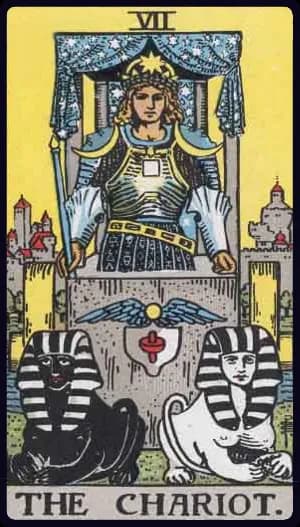
The Chariot Tarot Card Meaning: Willpower, Direction, and Winning the Hard Way
The Chariot is card seven, and it's the first card in the Major Arcana that's about winning. The cards before it are about learning who you...
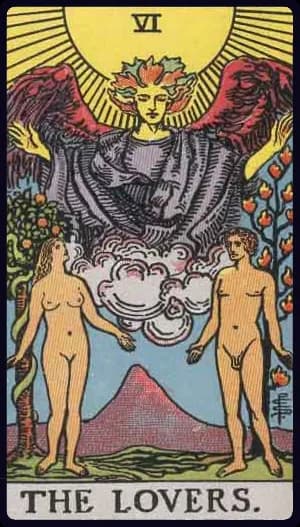
The Lovers Tarot Card Meaning: Love, Choice, and Living by Your Values
The Lovers is card six, and it's probably the card people most want to see in a love reading. Two people, an angel, a glowing sun, a...

The Hierophant Tarot Card Meaning: Tradition, Teachers, and What You Choose to Believe
The Hierophant is card five of the Major Arcana, and the Hierophant tarot card meaning starts with a reputation problem. People see a man...