The Fool Tarot Card Meaning: The Complete Guide to Card Zero
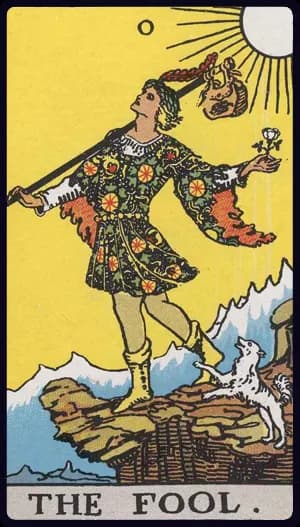
The Fool is card zero. It sits at the start of the Major Arcana, but zero also means it doesn't really sit anywhere. Every other trump has a fixed place in the line. The Fool walks through all of them, meeting the Magician, the Empress, Death, the Tower, and everyone else on the way to the World. That's why readers call the Major Arcana "the Fool's Journey": the other twenty-one cards are the places the Fool stops.
This is the first post in a series covering every Major Arcana card, one a day. Since the Fool is the traveler through the whole series, this guide goes long. We'll cover where the card came from, what every symbol on it means, how to read it upright and reversed in every area of life, how it changes by spread position, which cards change its meaning, and the mistakes people make with it.
Quick reference
| Number | 0 (unnumbered in many older decks) |
| Arcana | Major |
| Element | Air |
| Astrology | Uranus (modern); Air (Golden Dawn) |
| Hebrew letter | Aleph (א) |
| Upright keywords | beginnings, freedom, faith, spontaneity, potential, the leap |
| Reversed keywords | recklessness, hesitation, naivety, fear of starting, poor judgment |
| Yes or no | Yes (reversed: not yet) |
Where the Fool comes from
Tarot started in 15th-century Italy as a card game, not a divination tool. The early decks, called tarocchi, added a set of picture cards, the trumps, to the regular four suits. The Fool was the odd one out from the beginning. It had no number, and in play it usually didn't win or lose tricks. A player could throw it down to get out of following suit, which is why the French called it l'Excuse, "the excuse." It was a wild card in the most literal way: part of the game, but not bound by its rules.
In the Tarot de Marseille, the Fool is Le Mat, a ragged wanderer with a stick and a bundle, often with an animal pulling at his trousers. He doesn't look young or carefree. He looks like a vagabond, someone outside society, possibly mad. Early on, "fool" meant something closer to that: the holy fool, the court jester, the village madman, the person nobody takes seriously who sometimes says the truest thing in the room.
The Fool most people picture today comes from the Rider-Waite-Smith deck, published in 1909. Arthur Edward Waite designed the symbolism and Pamela Colman Smith painted the cards. Smith turned the ragged wanderer into a bright young traveler at the edge of a cliff, and that image changed how the card is read. The older Fool was about madness and being outside the order of things. Smith's Fool is about innocence, freedom, and the first step.
Interestingly, Waite's own list of meanings in The Pictorial Key to the Tarot (1910) is pretty harsh. He lists things like folly, mania, extravagance, and frenzy for the upright card. Modern readers have mostly let that go in favor of the hopeful version on Smith's painting, but the older shadow is still useful. The Fool really can be a fool. We'll come back to that.
Why zero?
Where to put the Fool has been argued about for centuries. Some traditions put it at the very end, after the World, as card 22. Others slip it between Judgement and the World. The Golden Dawn, the 19th-century occult order Waite belonged to, put it first as zero, and that's where it stays in most modern decks.
Zero is a good fit. It's nothing and it's potential at the same time. It's the empty circle before anything has been written in it, the egg before it hatches. The Fool hasn't become anything yet, so it could become anything. Every other card is a stage on the road, and the Fool is the one walking it.
The symbolism, detail by detail
Smith packed a lot into this card. Here's what to look for.
The cliff edge. The most important detail. The Fool is one step away from a drop and looking at the sky, not the ground. The risk is real. Whether the Fool is brave or oblivious is the central question the card asks you.
The face turned upward. The Fool's attention is on something higher: an idea, a dream, a calling. That's the source of their courage and also of their blind spot.
The small bundle on a stick. Traditionally it holds everything the Fool owns, or the memories and lessons of past lives, depending on who you ask. Either way, it's small. They're traveling light and trusting the road to provide.
The white rose. Purity of desire. The Fool wants things in a clean, unselfish way that hasn't been bent by disappointment yet. In other cards, roses come back red (passion, the Magician's garden); here, the rose is white because nothing has happened yet.
The white dog. Often read as instinct, loyalty, or the part of you that senses danger. Some readers see it barking a warning, others see it jumping in excitement. Its ambiguity is useful in a reading. Pay attention to which way you instinctively read it.
The bright yellow sky and the sun. Optimism, clarity, and the energy of morning. The Fool is at the start of the day and the start of the journey. The sun sits behind them, as if it's watching over or pushing them forward.
The mountains in the distance. Cold, white, and far away. These are the hard lessons and challenges further down the road, the Tower and Death and the long nights of the Moon. The Fool can't see them yet. That's what makes the first step possible.
The clothes. The Fool is dressed in bright, patterned clothing and a cap with a red feather. It's not travel gear. They're dressed for celebration, not for hardship, which tells you a lot about how prepared they are.
The staff. In the Marseille deck the Fool leans on it like a walking stick. In Smith's version it's mostly just carrying the bundle. Some readers connect it to the Magician's wand on the next card: the Fool holds the tool but doesn't know how to use it yet.
Astrology, element, and the Hebrew letter
The Golden Dawn linked each Major Arcana card to a letter of the Hebrew alphabet and an astrological or elemental force. The Fool got Aleph (א), the first letter, and the element Air.
Aleph fits for a few reasons. It's the first letter, so it's the beginning. It's also nearly silent in Hebrew, which matches the Fool's zero: present, but empty. Air is breath, space, and movement. It's the invisible thing everything else moves through, the same way the Fool moves through every card in the deck.
Later astrologers paired the Fool with Uranus, the planet of sudden change, rebellion, and breaking the rules. Uranus wasn't discovered until 1781, long after tarot existed, so the link is modern. But it's a good match. Uranus energy is unpredictable, freedom-loving, and allergic to doing things the normal way, which is pure Fool.
If you're an Aquarius (ruled by Uranus) or have a lot of Air in your chart, you may find the Fool shows up a lot in your readings, or that its energy feels especially familiar.
The Fool upright
Keywords: new beginnings, freedom, spontaneity, faith, innocence, potential, adventure, the leap into the unknown.
When the Fool shows up upright, something is starting, or about to. It might be big (a move, a new job, a new relationship) or quiet (a new way of thinking, a change in what you want). The card doesn't promise it'll work out. It says you're allowed to begin before you've got everything figured out.
That's the hard part for most of us. We want a plan, a safety net, and some kind of guarantee before we jump. The Fool has none of those and goes anyway. In a reading, the card often points at the place where you're overthinking. You've done the research, you've asked everyone for advice, you've made the pros-and-cons list three times. The only thing left is the step itself.
The upright Fool is also about trust. Not blind trust in a person or a plan, but trust in yourself to figure it out as you go. The Fool believes the road will meet them. Sometimes that belief is the thing that makes it true.
And it's a card of play. If life's felt heavy and serious lately, the Fool asks when you last did something just because it sounded fun, with no goal or reason. Joy isn't a distraction from the journey. For the Fool, it's the point.
The Fool reversed
Keywords: recklessness, hesitation, naivety, carelessness, fear of the unknown, risk without thought, missed opportunity, foolishness.
Reversed, the Fool can lean two very different ways, and usually you'll know right away which one fits.
Too much Fool
You're jumping without looking. Quitting the job on a Tuesday with no savings. Moving in with someone after three weeks. Putting money into something because a stranger online said it was a sure thing. Ignoring every warning sign because the idea feels exciting.
This is the version Waite was describing with words like folly and extravagance. The reversed Fool here is the dog barking and you ignoring it. The card isn't telling you to never take risks. It's telling you the specific risk you're about to take hasn't been thought through.
Not enough Fool
The opposite. You're standing at the edge and you won't move. You want the new thing, but fear, perfectionism, or worrying about what people will think keep you frozen. Every week you say you'll start next week. You keep "getting ready" so you never have to begin.
This version of the reversed Fool is quieter and more common than the reckless one. It's the person who's been "about to" write the book, launch the business, or leave the relationship for five years.
How to tell which one it is
Look at the cards around it and at your own gut reaction. If you felt a flash of guilt when you saw it, it's probably the reckless version: some part of you knows you're about to do something rash. If you felt a heavy sigh, it's probably the frozen version: you know exactly what you're avoiding.
Either way, the question is the same: are you choosing this risk, or is the risk (or the fear of it) choosing for you?
The Fool in love and relationships
Upright
If you're single: new romance is on its way, or at least it's possible if you put yourself out there. The Fool is a nudge to stop scripting every first date in your head and to say yes to the invitation. It also suggests a light, fun connection, not necessarily something serious right away. Enjoy it for what it is.
If you're in a relationship: it's time for a fresh start or a little adventure. Take the trip, try something new together, or have the conversation about where the two of you want to go next. The Fool can also show up when a relationship is moving to a new stage, like moving in, getting engaged, or starting a family.
For feelings ("how do they feel about me?"): they feel excited, curious, and a bit giddy around you. But the Fool isn't a card of deep commitment. They may not have thought about the long term yet.
Reversed
If you're single: you might be holding back from love because getting hurt last time made you so careful you've closed off. Or, the opposite, you keep falling hard and fast for people who aren't good for you.
If you're in a relationship: something is moving too fast, or someone is being careless with the other person's feelings. It can also point to a partner who won't commit because they want to keep their options open.
For feelings: they may be uncertain, flaky, or scared of what they feel.
The Fool in career and work
Upright
A new job, a new role, a career change, a side project, or starting a business. The Fool is a good card for taking a chance on something you care about, especially if you're early in your path and have room to experiment. It's also a common card for students, recent graduates, and anyone starting over in a new field.
If you're asking whether to apply, pitch, or launch, the Fool usually says go. Just do it with your eyes open.
Reversed
Jumping into a new role without asking basic questions, or making a career move on impulse. It can also show up when you're stuck in a job you've outgrown because leaving feels too scary. Look at whether you're being reckless or frozen.
The Fool in money and finances
Upright
A fresh start with money, a new source of income, or a willingness to take a smart risk. But this is the card where the dog really matters. Be brave, not careless. The Fool is great at starting things and terrible at reading the fine print.
Reversed
Impulsive spending, gambling, risky investments, or getting scammed by a deal that seems too good to be true. If money's on the line and the Fool shows up reversed, slow down and check everything twice.
The Fool in health and wellbeing
Tarot isn't a substitute for medical advice. If you have health concerns, see a professional.
Upright
A fresh start with your health: a new routine, a new kind of exercise, a decision to take better care of yourself. It can also be a reminder to bring some play into how you move your body. Not everything has to be a strict program.
Reversed
Carelessness with your health, ignoring symptoms, or taking physical risks. It can also point to anxiety about the unknown that's showing up in your body.
The Fool in spirituality
The Fool is one of the most spiritual cards in the deck. It represents the soul at the start of its journey, before experience has shaped it. Upright, it suggests a spiritual awakening, a new path, or a time to explore practices and beliefs with a beginner's mind. Don't worry about doing it "right." Just be curious.
Reversed, it can mean you're avoiding spiritual growth, or the opposite: chasing every new practice and guru without settling into anything long enough to learn from it.
The Fool by spread position
Where the Fool lands in a spread changes what it's saying.
Past: a time when you took a leap, started something new, or were more innocent and open than you are now. It might be asking what you lost from that time, or what you learned.
Present: you're at a beginning right now, whether you've noticed it or not. The choice to step forward is in front of you.
Future: a new chapter is coming. Something will start, and it'll ask you to trust it.
Advice: start. Take the first step, the small one, today. You don't need to see the whole staircase. You just need to see the next stair, and maybe check that it's actually there.
Obstacle or challenge: your naivety or impulsiveness might be working against you, or your fear of starting is the thing in the way.
Outcome: the situation will lead to a new beginning, not a neat ending. Something will open up rather than close.
Hopes and fears: you may both want and dread a fresh start. Freedom is exciting and terrifying in equal measure.
The Fool as a yes or no
The Fool is usually a yes, especially for questions about starting something, trying something new, or taking a chance. It's an enthusiastic, slightly reckless yes.
Reversed, it leans toward not yet. The answer could turn into a yes once you've thought it through, gathered more information, or worked through the fear holding you back.
The Fool in combination with other cards
The cards around the Fool shape how you read it. A few common pairings:
The Fool + The Magician: the idea becomes a plan. You have both the courage to start and the skills to pull it off. One of the strongest "go for it" combinations in the deck.
The Fool + The Tower: a leap you didn't choose. Sudden change forces you into a new beginning. Scary, but it clears the way.
The Fool + Death: an ending opening the door to a fresh start. Something has to be let go before the new chapter begins.
The Fool + The World: the end of one cycle and the start of the next. You've finished a journey and you're about to begin another, at a higher level.
The Fool + The Lovers: a new relationship, or a big choice about love that requires a leap of faith.
The Fool + Ace of Wands: a burst of creative energy and the courage to act on it. Great for new projects and passions.
The Fool + Two of Swords: you're frozen at a crossroads. You know you need to make a choice and start, but you keep avoiding it.
The Fool + Eight of Cups: walking away from something that no longer fulfills you, to look for something that does.
The Fool + Ten of Pentacles: a risky choice involving family, money, or tradition. Starting something new may mean leaving a safe, established path behind.
The Fool + The Hermit: a solo journey. Travel alone, a period of self-discovery, or a new beginning that you have to figure out by yourself.
Common mistakes when reading the Fool
Reading it as "you're being stupid." The modern Fool is rarely an insult. Even reversed, it's more often pointing at fear or hesitation than at plain foolishness.
Treating it as permission to do anything. The upright Fool says begin, not "ignore every consequence." The cliff is still a cliff.
Ignoring the dog. If your gut is telling you something about this card in your reading, listen to it. That's the dog's job.
Expecting it to describe the whole journey. The Fool is about the start. It doesn't tell you how things will end. For that, look at the cards that follow it.
Forgetting it can mean you. When the Fool appears as a person, it's often you: the part of you that's new to something, inexperienced, and open. Not every Fool is another person in your life.
The Fool as a person
When the Fool represents someone in a reading, it's usually someone young at heart (not necessarily in age), spontaneous, adventurous, and a bit unpredictable. They're fun to be around, full of ideas, and they hate being tied down. They may also be unreliable, impractical, or hard to pin down. Think of the friend who says "let's go to Mexico" and is packing their bag before you've said yes.
Journal prompts for the Fool
- What would I start tomorrow if I knew I couldn't fail?
- Where in my life am I waiting for permission I don't actually need?
- What am I carrying in my "bundle" that I could put down?
- Is my hesitation wisdom, or is it fear dressed up as wisdom?
- When was the last time I did something just for fun? What did it feel like?
- If I had to take one small step toward the thing I want, what would it be?
The Fool's Journey: a map of the series
Since the Fool walks through the whole Major Arcana, here's a quick preview of the road ahead. Each card is a lesson the Fool learns along the way.
- The Magician: discovering skill and willpower
- The High Priestess: learning to trust intuition
- The Empress: abundance, creativity, nurture
- The Emperor: structure and authority
- The Hierophant: tradition, teachers, and belief
- The Lovers: choice and connection
- The Chariot: drive and direction
- Strength: courage and gentle control
- The Hermit: solitude and inner wisdom
- Wheel of Fortune: cycles, luck, and fate
- Justice: truth and consequences
- The Hanged Man: surrender and a new perspective
- Death: endings and transformation
- Temperance: balance and patience
- The Devil: attachment and temptation
- The Tower: upheaval and revelation
- The Star: hope and healing
- The Moon: illusion and the unknown
- The Sun: joy and success
- Judgement: awakening and reckoning
- The World: completion, and the start of a new journey
When the Fool reaches the World, the journey doesn't end. It loops. The World's completion becomes the next Fool's beginning, and the circle of zero starts again.
Frequently asked questions
Is the Fool a good or bad card? Mostly good. It's about fresh starts, freedom, and possibility. Reversed, it can warn about recklessness or fear, but even then it's pointing you toward growth.
Does the Fool mean someone is being foolish? Sometimes, especially reversed. But more often it describes innocence and openness, not stupidity.
What does the Fool mean as feelings? Excitement, curiosity, and attraction without a lot of thought about the future. Reversed, it can mean uncertainty or fear of commitment.
What zodiac sign is the Fool? The Fool is linked to Uranus and the element Air, not to a single zodiac sign. Aquarius, ruled by Uranus, is the sign most often connected to it.
What does it mean if the Fool keeps showing up in my readings? You're in a period of beginnings, or something in your life is asking you to start. If it keeps showing up reversed, look at what you've been putting off.
Where the journey goes next
The Fool steps off the cliff and lands in front of the Magician, card one: the moment raw potential picks up the tools and finds out what it can actually do. That's tomorrow's card.
Until then, you can see the Fool's upright and reversed meanings and how it shows up in readings on the Fool card page. Or draw a card in Taroter and see if the Fool comes looking for you.
Taroter
Author
Related articles

The Emperor Tarot Card Meaning: Structure, Authority, and the Art of Holding Things Together
The Emperor is card four, and he is the least fun person at the party. He's also the reason there's a party at all: someone booked the...

The Empress Tarot Card Meaning: Abundance, Creativity, and the Art of Growing Things
The Empress is card three, and she's the first card in the Major Arcana that feels like you could lie down in it. The Magician worked under...
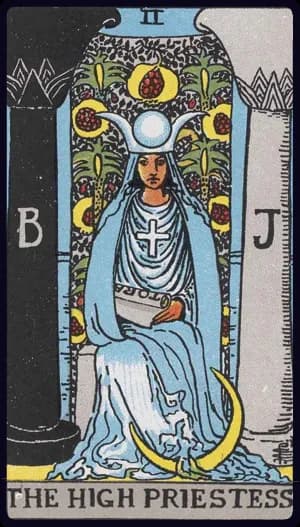
The High Priestess Tarot Card Meaning: Intuition, Secrets, and the Space Between
The High Priestess is card two, and she's the first card in the deck that doesn't want to tell you everything. The Magician stood in bright...